By Mark “Coach” Soto | Senior Real Estate Advisor | CalDRE# 01339521
The conversation usually starts the same way. A couple from Walnut Creek, or Fremont, or Mountain View calls and says some version of: “We’ve been looking at this for two years. We have a budget that feels completely impossible in the Bay Area and we keep hearing Sacramento. We have two kids. Where do we actually go?”
It’s a good question — and it deserves a real answer, not a generic list of zip codes.
I have been working with families making this move for 26 years, from both sides of the transaction. I live in Cameron Park. My office is in Cameron Park. My kids went to school here. I know these communities from the inside — not from a Zillow search — and I know what Bay Area families specifically are looking for when they make the move, because I have guided hundreds of them through it.
What follows is my honest, experience-based answer to the question every Bay Area family is asking in 2026.
First: Why the Foothills, Not Sacramento Proper?
When Bay Area families say “Sacramento,” they usually mean the broader region — and when they start researching seriously, they almost always end up in the foothill communities east and northeast of the city rather than Sacramento itself. Here is why that keeps happening:
Schools. The foothill communities — Folsom, El Dorado Hills, Granite Bay, Rocklin — have school districts that rank among the best in California. Families leaving Palo Alto Unified or Piedmont City Unified for Sacramento City Unified would feel the change immediately. Families landing in Folsom Cordova Unified, the El Dorado Union High School District, the Eureka Union School District, or Rocklin Unified feel much less drop-off in academic quality and parent community investment.
Safety. Crime rates in the foothill communities are consistently among the lowest in Northern California. This matters enormously to families used to the relative safety of Bay Area suburban communities.
Value. A Bay Area family selling a $1.4 million home in Fremont or a $1.8 million home in Cupertino arrives in the foothill communities with genuine purchasing power. Homes that would be impossible in the Bay Area — large lots, newer construction, gated communities, pool — are accessible here.
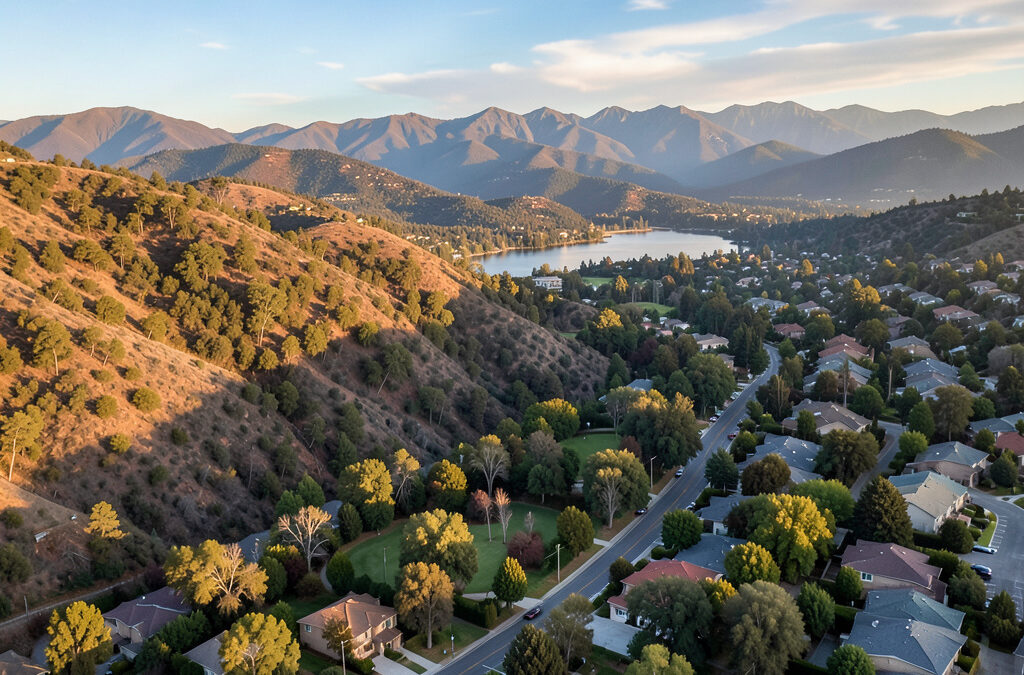
Lifestyle. Folsom Lake, 50+ miles of trails, Tahoe 90 minutes away. The outdoor lifestyle of the foothills is genuinely exceptional and it is one of the things Bay Area families most consistently say surprised them in a positive way after the move.
With that context, here are the five communities I point Bay Area families to first — with honest assessments of what each one is and is not.
1. Folsom — The Most Bay-Area-Compatible Move
Best for: Families who want a walkable downtown, strong schools, a proven tech employment base, and the widest range of price points in the foothill corridor.
Folsom is the most complete community on this list. It has everything — a vibrant Historic Old Town district with restaurants, shops, and year-round events; Folsom Lake State Recreation Area minutes from most neighborhoods; 50+ miles of trails; top-ranked schools; and a local employment base anchored by Intel, Micron, and the broader technology corridor that runs along the Highway 50 corridor. For Bay Area tech workers who are going hybrid or remote but want to stay connected to California’s tech economy, Folsom often makes the most sense geographically.
Schools
Folsom is served by the Folsom Cordova Unified School District, with Vista del Lago High School and Folsom High School both carrying strong academic reputations. Multiple elementary schools in Folsom’s Empire Ranch and Russell Ranch neighborhoods rate 9–10 out of 10 on GreatSchools. For Bay Area families accustomed to strong public schools, Folsom represents the smallest adjustment.
Commute
Approximately 27 miles east of Sacramento via Highway 50. Morning commute to downtown Sacramento averages 25–35 minutes. For Bay Area commuters working remotely or traveling occasionally to the Bay, Sacramento Executive Airport is a 25-minute drive and SFO is roughly 2 hours by car or accessible via Amtrak Capitol Corridor.
Price Reality in 2026
Median sold price approximately $745,000–$785,000, with the most active buyer segment in the $650,000–$950,000 range. New construction in Folsom Ranch south of Highway 50 starts in the mid-$600s — but carries Mello Roos assessments averaging around $4,000 per year, which matters for total monthly budget calculations. Established neighborhoods like Empire Ranch, The Parkway, and Willow Creek carry no Mello Roos in most sections and typically offer larger lots and mature landscaping.
The Honest Tradeoff
Folsom is the foothill community most similar to a Bay Area suburb — which is exactly what draws some families and puts others off. If you are specifically leaving the Bay Area because you want something different — more land, more quiet, more character — you may find Folsom’s master-planned neighborhoods feel a little familiar. The communities further east offer more of a departure.
→ Browse Folsom homes for sale | Download the Bay Area to Folsom Relocation Guide
2. El Dorado Hills — Best Overall Lifestyle Package
Best for: Families who want resort-quality lifestyle infrastructure, a genuine Town Center, panoramic Sierra Nevada views, and a community that feels purpose-built for family life.
El Dorado Hills is the community I recommend most often to Bay Area families who have done their research and are ready to commit to the foothill lifestyle fully. It has the most complete lifestyle infrastructure of any community in the corridor — and it shows in the numbers. San Francisco buyers are the single largest out-of-metro search cohort for El Dorado Hills real estate, according to Redfin data. Families who have made the move consistently say the Town Center, the 33 parks, the trails, and the views exceeded what they expected.
The Town Center Advantage
El Dorado Hills Town Center is not a strip mall. It is a genuine outdoor retail and dining destination — Nugget Market, Target, Regal Cinemas, local restaurants, a Sunday farmers market, Thursday evening live music in summer, a skating rink in winter. For Bay Area families used to walkable town centers in places like Danville, Pleasanton, or Palo Alto, the Town Center fills that social and community function in a way that few Sacramento-area communities can match.
Schools
El Dorado Hills is served by the El Dorado Union High School District, anchored by Oak Ridge High School — strong academics, robust AP offerings, and excellent college placement. Elementary and middle schools in the Rescue Union and Buckeye Union feeder districts rate consistently high. One school assignment note worth knowing: families in Blackstone are currently zoned for Union Mine High School, approximately 20 minutes away — not Oak Ridge. Confirm school boundaries for any specific property before purchasing.
Commute
25 miles east of Sacramento via Highway 50. The El Dorado Hills Business Park — immediately adjacent to the community — employs thousands locally in technology, healthcare, and professional services, making EDH increasingly a live-work community rather than purely a bedroom suburb. For remote workers, El Dorado Hills has become one of the most sought-after work-from-home addresses in Northern California.
Price Reality in 2026
Median list price approximately $949,000; average sold price across all neighborhoods $1,097,200. The range is wide: Heritage El Dorado Hills 55+ averages $711,000 on the accessible end; Serrano Country Club averages $1,950,000 at the luxury end. For Bay Area families arriving with $1.2–$1.8 million in equity, El Dorado Hills buys significantly more home and more lifestyle than anything comparable in the Bay Area at that price point.
The Honest Tradeoff
El Dorado Hills is not the most affordable community on this list, and it is not the most private. Families who want acreage, agricultural land, or genuine rural living will find EDH too suburban. But for families who want the best combination of schools, lifestyle amenities, community infrastructure, and beauty — without trading away accessibility — El Dorado Hills is consistently the answer.
→ Browse El Dorado Hills homes for sale | Download the Bay Area to El Dorado Hills Relocation Guide
3. Granite Bay — Best for Families Who Want Prestige, Privacy, and the Best Schools in the Region
Best for: Families prioritizing the absolute highest school quality, gated estate living, genuine privacy on large lots, and a community that will hold and appreciate its value long-term.
Granite Bay is where Bay Area families with significant equity — those selling $2 million+ Bay Area homes — most frequently land when they do their research. The price point is higher, but what it buys is genuinely exceptional: guard-gated custom estates, the Granite Bay Golf Club (a Robert Trent Jones Jr. design), Folsom Lake on the doorstep, equestrian properties, and some of the best public schools in California.
Schools
Granite Bay High School holds National Blue Ribbon status and offers the International Baccalaureate program — one of only two schools in the Roseville Joint Union High School District with this designation. K–8 is served by the Eureka Union School District, consistently one of California’s highest-performing elementary districts and one of the few with its own parent-sponsored educational foundation. For Bay Area families leaving high-performing schools like Lynbrook, Saratoga, or Piedmont, Granite Bay’s schools represent the smallest possible academic transition anywhere in the Sacramento region.
The Gated Community Advantage
The majority of Granite Bay’s most desirable neighborhoods are gated — many with 24-hour guard staffing. Los Lagos, Wexford, Greyhawk, Wedgewood, Ashley Woods. For families accustomed to the private school and gated community culture of parts of the Bay Area, Granite Bay’s security infrastructure feels familiar. Importantly, regulation has halted the construction of new gated communities in Granite Bay — making existing gated inventory increasingly scarce and valuable.
Commute
25 miles northeast of Sacramento via Interstate 80. Roseville — a major regional employment and retail hub — borders Granite Bay directly, providing walkable and short-drive access to major employers and amenities. For Bay Area commuters, Granite Bay’s position on Interstate 80 provides the most direct freeway connection back to the East Bay of any community on this list.
Price Reality in 2026
Median list price approaching $1.39 million; average home value approximately $1.1 million. Gated community product in Los Lagos, Wexford, and Greyhawk runs $1 million to $4 million+. For families selling $1.8–$2.5 million Bay Area homes, Granite Bay delivers a home of extraordinary quality — custom construction, large lot, pool, Folsom Lake access — at a price that would be impossible in Los Altos or Atherton. No Mello Roos in most of Granite Bay is a meaningful cost-of-ownership advantage over newer Placer County communities.
The Honest Tradeoff
Granite Bay does not have its own walkable town center the way Folsom or El Dorado Hills does. The lifestyle is private and residential rather than community-event-oriented. Families who want a downtown to stroll have Roseville a few minutes away and Sacramento 30 minutes west — but Granite Bay itself is quiet by design. That is not a flaw for the right family; it is the feature.
→ Browse Granite Bay homes for sale | Download the Placer County Relocation Guide
4. Rocklin — Best Value for Strong Schools Without the Premium
Best for: Bay Area families who want California’s best school district rankings at a price point that leaves meaningful financial runway — and a community with a genuine small-town identity despite significant growth.
Rocklin is the community that surprises Bay Area families most often. The name does not carry the same brand recognition as Folsom or El Dorado Hills, but the school district consistently outranks both of them in statewide rankings — and the price is lower. For families whose primary criterion is school quality and who are less focused on prestige or resort lifestyle, Rocklin is frequently the best answer on this list.
Schools
The Rocklin Unified School District is consistently ranked among the top 5–10% of school districts in California by multiple independent rating systems. High schools, middle schools, and elementary schools across the district perform at levels that rival or exceed comparable Bay Area districts — and the district maintains a culture of parent engagement and academic investment that Bay Area families find familiar. For families currently in high-performing Bay Area districts like Fremont Unified or San Ramon Valley Unified, Rocklin Unified is a lateral move, not a step down.
Community Character
Rocklin has deep roots — a history in the Gold Rush, railroad, and granite quarrying industries that gives it genuine character underneath its suburban surface. The quarry lakes that remain from the granite mining era are now recreational amenities. Whitney Oaks, Stanford Ranch, and The Park at Rocklin are the most sought-after neighborhoods. The city has grown significantly over the past decade but retains a small-town social identity that larger, more anonymous communities do not.
Commute
20 miles northeast of Sacramento via Interstate 80 — the shortest commute distance of any community on this list. For Bay Area families with one partner who still needs occasional Bay Area access, Rocklin’s Interstate 80 position and proximity to Sacramento International Airport make it the most logistically flexible choice.
Price Reality in 2026
Median home prices broadly in the $550,000–$750,000 range, with premium neighborhoods pushing toward $1 million. For Bay Area families selling $1.5–$2 million homes, Rocklin’s price point leaves the most equity after the move — money that goes into retirement savings, college funds, or simply the financial breathing room that Bay Area living never permitted. This is not a consolation prize; for many families, the financial liberation is the point of the whole move.
The Honest Tradeoff
Rocklin does not have the visual drama of El Dorado Hills or the lakefront prestige of Granite Bay. It is a well-run, well-schooled, well-priced suburban community — which is exactly what a significant portion of Bay Area families actually need, once they are honest with themselves about their priorities. If the question is “where do my kids get the best public education while we rebuild our financial stability after years of Bay Area housing costs,” Rocklin is hard to beat.
→ Browse Placer County homes for sale
5. Cameron Park & Shingle Springs — Best for Families Who Want Space, Privacy, and the Real Foothill Feel
Best for: Bay Area families who are specifically leaving suburban density and want acreage, privacy, a slower pace, and genuine Sierra Nevada foothill character — without giving up Highway 50 access or reasonable commute times.
I am biased here — this is where I live and where my office is. But the bias is earned. Cameron Park and Shingle Springs are the communities that deliver what a certain type of Bay Area family is actually looking for when they say they want “something different.” Half-acre to multi-acre lots. Mature oak trees. Genuine quiet. Horses, gardens, and room to breathe. No HOA in many neighborhoods. No Mello Roos. Reasonable prices. Highway 50 access that puts El Dorado Hills, Folsom, and Sacramento all within reach.
What Cameron Park Is
Cameron Park is an established foothill community — not master-planned, not new construction, not a resort amenity package. It has a country club (Cameron Park Country Club), a lake (Cameron Park Lake), a community center with year-round programming, good schools in the El Dorado Union High School District, and a genuinely neighborly character that larger communities cannot manufacture. Families who move here often say after a year that it is the first place they have lived where they actually know their neighbors.
Shingle Springs — More Land, More Privacy
Five minutes east of Cameron Park, Shingle Springs amplifies everything Cameron Park offers. Larger parcels, more privacy, more oak woodland, more of the agricultural and equestrian character that defines the upper El Dorado County foothill lifestyle. Custom homes on 1–5+ acres are common at price points that would not exist anywhere in the Bay Area. For families who want the city-to-country transition to feel complete rather than partial, Shingle Springs is where that feeling lives.
Schools
Both communities are served by the El Dorado Union High School District, with Ponderosa High School and El Dorado High School serving most of the area. Strong academic programs and significantly smaller class sizes than Bay Area comparison schools. Elementary feeder districts include Rescue Union and Buckeye Union — both well-regarded.
Commute
30–40 miles east of Sacramento via Highway 50. The honest commute to Sacramento runs 35–50 minutes depending on origin point and traffic. For remote workers and hybrid commuters who need occasional Sacramento access, this is entirely manageable. For daily downtown Sacramento commuters, it is at the edge of comfortable — worth an honest conversation about how often “occasional” actually means.
Price Reality in 2026
Cameron Park homes on standard lots run $550,000–$900,000. Shingle Springs custom homes on acreage run $600,000–$2 million+ depending on land size, views, and construction quality. For Bay Area families who want genuine land — not a 6,000 square foot lot but a real acre or more — this is the only community on this list where that is consistently available at accessible price points.
The Honest Tradeoff
Cameron Park and Shingle Springs do not have the glossy, brand-name recognition of El Dorado Hills or Granite Bay. The town center is functional, not curated. The lifestyle reward is privacy, space, and character — not amenity packages and resort pools. Families who have moved here from the Bay Area and discovered they love it are among the most consistently satisfied clients I have. Families who expected more of a suburban infrastructure feel sometimes wish they had landed in EDH instead. Knowing which type you are matters more than anything else in this decision.
→ Browse El Dorado County homes for sale | Download the El Dorado County Relocation Guide
Side-by-Side: How the 5 Communities Compare
| Community | Median Price | School District | Commute to Sac | Best For |
|---|---|---|---|---|
| Folsom | $745K–$785K | Folsom Cordova USD | 25–35 min | Walkable downtown, tech employment, widest price range |
| El Dorado Hills | $949K–$1.1M avg | El Dorado Union HSD | 25–35 min | Best lifestyle package, Town Center, views, community identity |
| Granite Bay | $1.1M–$1.39M | Eureka Union / RJUHSD | 25–35 min (I-80) | Best schools, gated estates, privacy, prestige, Folsom Lake |
| Rocklin | $550K–$750K | Rocklin USD | 20–30 min | Best school district value, most financial runway post-move |
| Cameron Park / Shingle Springs | $550K–$900K+ | El Dorado Union HSD | 35–50 min | Acreage, privacy, genuine foothill character, no HOA/Mello Roos |
The Questions Bay Area Families Ask That Nobody Answers Honestly
“Will we miss the Bay Area?”
Some things, yes. The diversity of cuisine, the cultural density, certain friendships, the proximity to the coast. Almost nobody misses the commute, the cost, the housing anxiety, or the feeling that you are one job change away from financial crisis. Families who make the move and stay tend to have answered the question “what are we moving toward?” before they answered “what are we leaving?” The families who struggle are the ones who defined the move entirely in terms of what they were escaping.
“Is the quality of life really that different?”
In specific measurable ways, yes. More space. Lower cost of living. Less traffic. More outdoor access of a different kind — Folsom Lake instead of the Bay, Tahoe instead of Tahoe-as-a-4-hour-traffic-event. Schools that rival what you are leaving. Neighbors who know your name. Whether those specific things matter to your family is the question only you can answer.
“Is the timing right in 2026?”
The foothill markets entered spring 2026 with median prices appreciating 3–7% year-over-year, inventory historically low, and Bay Area migration sustained at approximately 20,000 new regional residents annually. There is no “perfect” market timing, but there is a compelling case that a family buying in the foothill corridor in 2026 is buying into a market with strong structural demand, constrained supply, and a demographic tailwind from Bay Area migration that has shown no sign of abating. The families who waited in 2022 “for prices to drop” have generally paid more, not less, for the same homes they passed on.
“Do I need a local agent or can I handle this remotely?”
The communities on this list look superficially similar on Zillow. The differences that matter — specific street quality within a neighborhood, school boundary lines, Mello Roos variations between adjacent subdivisions, HOA quality, which lots back to noise versus greenbelt — are invisible from an MLS search and require someone who drives these streets regularly. Every Bay Area family I have worked with who tried to manage the purchase remotely from listings alone has either missed something important or paid for an education in the difference between data and local knowledge.
How I Work With Bay Area Families
Most of my relocating Bay Area clients begin with a single phone call — usually while they are still living in the Bay Area, still working through the decision, still trying to understand whether the math actually works. That call is free, there is no obligation, and in 30–45 minutes I can typically give a family a clearer picture of which community fits their specific priorities than three weekends of weekend drive-throughs.
For families who are ready to visit, I organize community tours that cover the relevant neighborhoods, drive the school drop-off routes, walk the trail systems, and stop at the spots that do not make the marketing brochures — because those are the ones that actually tell you whether you will be happy here.
The families that arrive well-prepared — knowing what they are looking for, having seen the communities in person, understanding the school boundary realities — make the best decisions and have the smoothest transitions. That is what I work to make happen.
→ Schedule a Free Consultation — We Can Talk Before You’re Ready to Move
→ Download: Bay Area to Folsom & El Dorado Hills Relocation Guide
→ Download: Bay Area to El Dorado Hills Relocation Guide
→ Download: Placer County Relocation Guide
Call or Text: (916) 532-3514
Email: coach@coachsoto.com
Mark “Coach” Soto | Senior Real Estate Advisor | CalDRE# 01339521 | Maloof Properties
Mark Coach Soto is a licensed California Realtor (CalDRE# 01339521) with 26 years of real estate and mortgage experience, serving buyers and sellers across Folsom, El Dorado County, Placer County, and the greater Sacramento area.
- Mark Coach Soto

- Mark Coach Soto
- Mark Coach Soto
- Mark Coach Soto